

Expanding access to colorectal cancer screening in rural Kentucky
A partnership between the University of Kentucky College of Public Health (CPH) and UK King’s Daughters Medical Center (UKKD) is helping more people in eastern Kentucky get tailored outreach and services based on clinical data alongside local knowledge.
In fall 2024, researchers matched UKKD’s screening records with publicly available data on income, age, and existing health conditions for people in Boyd, Carter, Greenup, and Lawrence counties in Kentucky and Lawrence County, Ohio, UKKD’s service area. This mapping highlighted counties and demographic groups with the biggest gaps in screening, guiding the team to direct outreach where it was needed most.
“This partnership has been instrumental in bringing the analytical, biostatistical, and population health expertise of the University of Kentucky College of Public Health into direct alignment with clinical care delivery,” said Charbel Salem, M.D., MBA, CPE, VP, Chief Medical/Chief Information & Innovation Officer at UK King’s Daughters Medical Center. “Through a rigorous, data‑driven approach, we gained a much deeper understanding of the care gaps affecting the populations we serve across Northeastern Kentucky and southern Ohio.”
This collaboration is already helping cross-sector partners understand where screening gaps are greatest and how to reach people who may not be connected to the health care system through their services. Based on analytical findings, the team developed simple, low‑barrier ways for residents to get screened, including at‑home stool tests that can be mailed back without needing time off work or transportation. These tests offer a more convenient and cost-effective alternative to a colonoscopy.
Margaret McGladrey, Ph.D., lead author of the study “Precision public health alliances as a model and method for community engagement,” explained that UKKD’s clinical team set the goal of improving colorectal cancer screening in its service area. By looking at electronic health records alongside information about cross-sector screening practices, partners can see where people are missing out on care and create simple, easy‑to‑use solutions that fit into everyday life.
“Analysis of UKKD’s population-level electronic health record data on colorectal cancer screening rates revealed lower screening rates among younger — ages 45–55 — Medicaid beneficiaries and use of colonoscopy as the primary screening method,” McGladrey said. “These data indicated that there were opportunities to increase low-prep, stool-based testing that may be more acceptable for younger Medicaid beneficiaries who may be working several jobs with inflexible hours than the higher-prep colonoscopy method.”
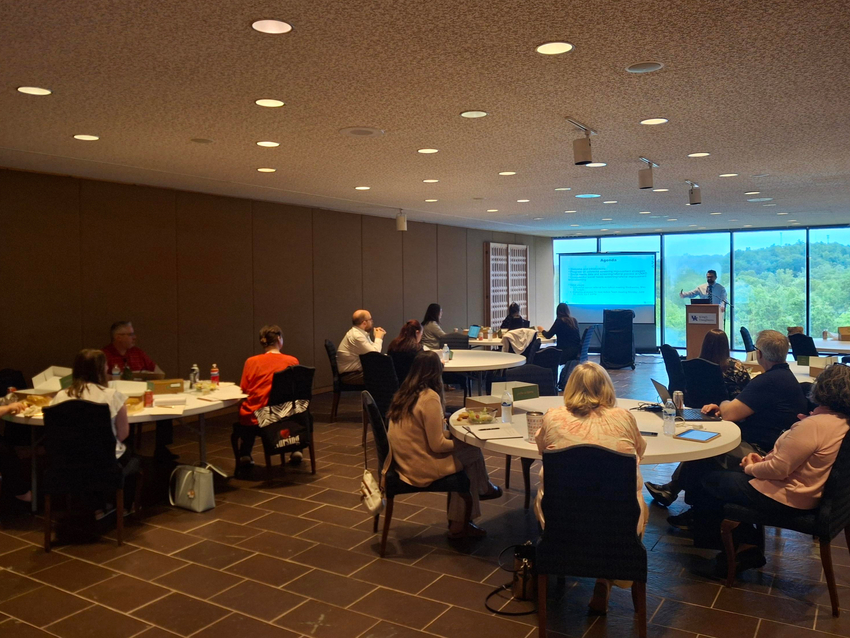
In March 2025, an action team made up of representatives from local health departments, libraries, UK Cooperative Extension Services offices, and Pathways, Inc., a community mental health center serving northeastern Kentucky, met to review the data.
“Community partners serve as trusted messengers within neighborhoods, workplaces, and community centers,” Salem said. “Without this trusted bridge, access alone would not translate into action.”
Together, the group agreed to include a one‑page referral form for a stool‑based test with their regular services. This gives residents a simple option they can complete at home and return by mail, avoiding the time and cost of a full colonoscopy.
Salem said the long‑term goal is to make lasting improvements in the health of families across the region. “The ultimate goal of this work is sustained, measurable improvement in the long‑term health of the communities we serve,” Salem said. “Over time, we believe this integrated, data‑driven, and community‑centered model will lead to healthier families, stronger communities, and lasting improvements in outcomes across Northeastern Kentucky and southern Ohio.”